Học Từ Gốc: Câu chủ đề nhất quán
T10/26
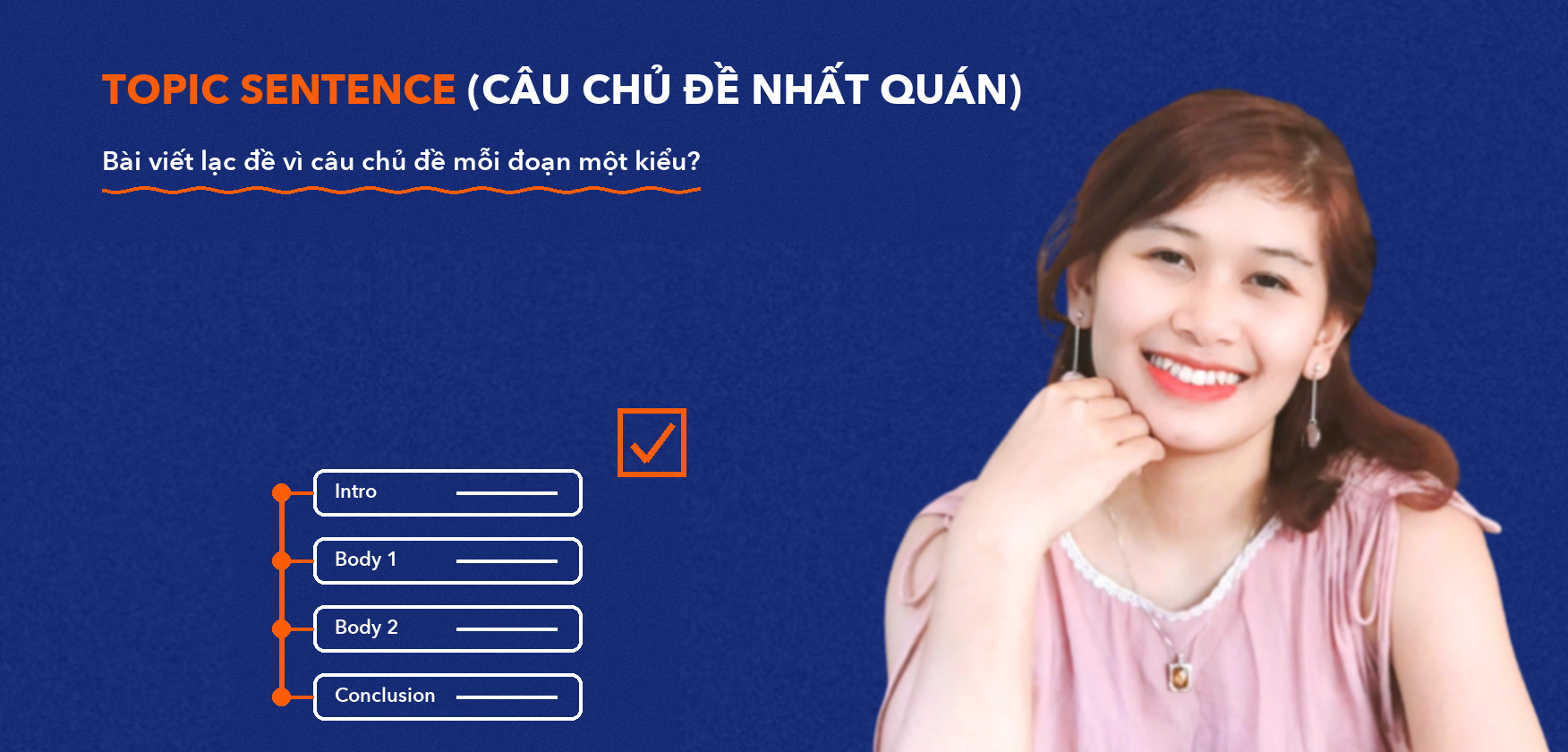
Consistent Topic Sentence
( Câu chủ đề nhất quán xuyên suốt bài )
1. Introduction (Giới thiệu chung):
Trong mỗi bài Viết IELTS, hiểu đúng chủ đề chính và ý kiểm soát của đề bài giúp chúng ta:
- Định hướng bài viết, tránh lạc đề.
- Tăng điểm Task Achievement / Task Response nhờ bám sát chủ đề.
- Tiết kiệm thời gian, giữ mạch nối trôi chảy từ đầu đến cuối bài.
Lỗi thường gặp: câu chủ đề của Mở bài, Thân bài và Kết bài mỗi câu nói một kiểu, không bám vào câu hỏi của đề → bài bị trôi ý.
2. Theory ( Phần lý thuyết ):

Topic + Controlling idea = Topic Sentence ( Chủ đề + Ý kiểm soát = Câu chủ đề ) Step 1: Đọc kỹ câu hỏi của đề bàiDù là Task 1 hay Task 2, xác định được Topic (chủ đề chính) và Controlling idea (ý kiểm soát). Step 2: Paraphrase câu chủ đề xuyên suốt cả bàiDựa vào câu chủ đề của đề bài, viết lại nó ở đầu Mở bài, mỗi Thân bài và Kết bài. |
Ví dụ: Phân tích câu hỏi của đề bài
Task 2: Some people think that instead of preventing climate change, we need to find a way to live with it. To what extent do you agree or disagree?
( Một số người cho rằng thay vì ngăn chặn biến đổi khí hậu, chúng ta cần tìm cách sống chung với nó. Bạn đồng ý hay không đồng ý ở mức độ nào? )
- Topic: Climate change ( biến đổi khí hậu )
- Controlling idea: Find a way to live with it ( tìm cách sống chung với nó )
- Question type: Opinion essay
Ví dụ 1: Câu chủ đề paraphrase xuyên suốt cả bài
Question: Some people say that it is possible to tell a lot about a person’s culture and character from their choice of clothes. To what extent do you agree or disagree?

| Question | tell a lot about a person’s culture and character from their choice of clothes. ( nói lên nhiều điều về văn hoá và tính cách của một người qua cách chọn quần áo ) |
| Introduction | a person’s culture and personality can be established simply by recognizing the clothes they choose to wear. |
| Body 1 | the dress sense of many people is reflective of their culture and interests. |
| Body 2 | understand a person just by looking at their clothing, especially in terms of their personality. |
| Conclusion | gather accurate information about a person’s background and character via their dress sense. |
→ Câu chủ đề của đề được viết lại ở mọi phần của bài (Body 2 đi theo hướng ngược lại nhưng vẫn bám đúng chủ đề).
Bài mẫu 1
Introduction: There is a view that a person’s culture and personality can be established simply by recognizing the clothes they choose to wear. In my opinion, although one’s choice of clothing can provide some insight into these traits, people can not learn much as appearances are only informative up to a certain point.
Body 1: To begin with, it is important to acknowledge that the dress sense of many people is reflective of their culture and interests. This is because many cultures have specific rules about dressing appropriately. For example, a man wearing an expensive suit and carrying a briefcase is often seen as being part of the business world. Due to these social symbols, such as suits, sunglasses, and religious clothing, it is possible to easily identify which culture a person belongs to.
Body 2: However, there are limits to how much one can understand a person just by looking at their clothing, especially in terms of their personality. As the saying goes, one should not form an opinion based solely on outward appearance. For instance, a woman dressed entirely in black might be seen as depressed, gloomy, or pessimistic because these feelings are commonly linked to this color. However, it is possible that she is coming back from a funeral or simply likes wearing black, and more importantly, that she actually has a cheerful nature.
Conclusion: In conclusion, while it is not impossible to gather accurate information about a person’s background and character via their dress sense, there is a real danger of being misled if this method of assessment is relied upon at all times.
Ví dụ 2: Áp dụng cho chủ đề mạng xã hội
Question: Some people believe that a person’s social media profile can reveal a great deal about their true personality and lifestyle. To what extent do you agree or disagree?
( Một số người tin rằng trang mạng xã hội của một người có thể cho thấy rất nhiều về tính cách thật và lối sống của họ. Bạn đồng ý hay không đồng ý ở mức độ nào? )

- Topic: A person’s social media profile ( trang mạng xã hội của một người )
- Controlling idea: Reveal their true personality and lifestyle ( cho thấy tính cách thật và lối sống )
- Question type: Opinion essay
| Question | reveal a great deal about their true personality and lifestyle. ( cho thấy rất nhiều về tính cách thật và lối sống của họ ) |
| Introduction | an individual’s online profile can accurately reflect their genuine character and way of life. ( trang cá nhân trên mạng phản ánh chính xác tính cách thật và cách sống ) |
| Body 1 | the posts people share frequently mirror their lifestyle and hobbies. ( bài đăng thường phản chiếu lối sống và sở thích ) |
| Body 2 | judge someone’s real character solely from what they post online. ( đánh giá tính cách thật chỉ qua những gì họ đăng ) |
| Conclusion | social media accounts offer clues about a person’s daily life and character. ( tài khoản mạng xã hội cho manh mối về đời sống và tính cách ) |
→ Body 1 bám vế lifestyle, Body 2 bám vế personality. Mở bài và Kết bài nhắc lại cả hai vế. Câu chủ đề của đề không bị đánh rơi ở đoạn nào.
Bài mẫu 2
Introduction: It is often argued that an individual’s online profile can accurately reflect their genuine character and way of life. In my opinion, although social media offers some clues about these aspects, it rarely presents the full picture, as most users carefully select what they share.
Body 1: On the one hand, it is undeniable that the posts people share frequently mirror their lifestyle and hobbies. Users tend to upload photos of the places they visit, the food they enjoy and the activities they take part in. For example, someone whose profile is filled with pictures of marathons and healthy meals is likely to lead an active life. In this sense, social media can serve as a useful window into a person’s daily routine.
Body 2: On the other hand, it is unwise to judge someone’s real character solely from what they post online. Many people present an idealised version of themselves, sharing only their happiest moments and hiding their struggles. For instance, a teenager who constantly posts cheerful selfies may in fact be feeling lonely or anxious. Moreover, some individuals are naturally private and post very little, which says nothing about their personality.
Conclusion: In conclusion, while social media accounts offer clues about a person’s daily life and character, relying on them alone may lead to inaccurate judgements, since online images are often carefully edited.